

PLEASE CONTACT US

If you are interested about HpH SHARK 4U and you want make a test flight or price inquiry please click here.

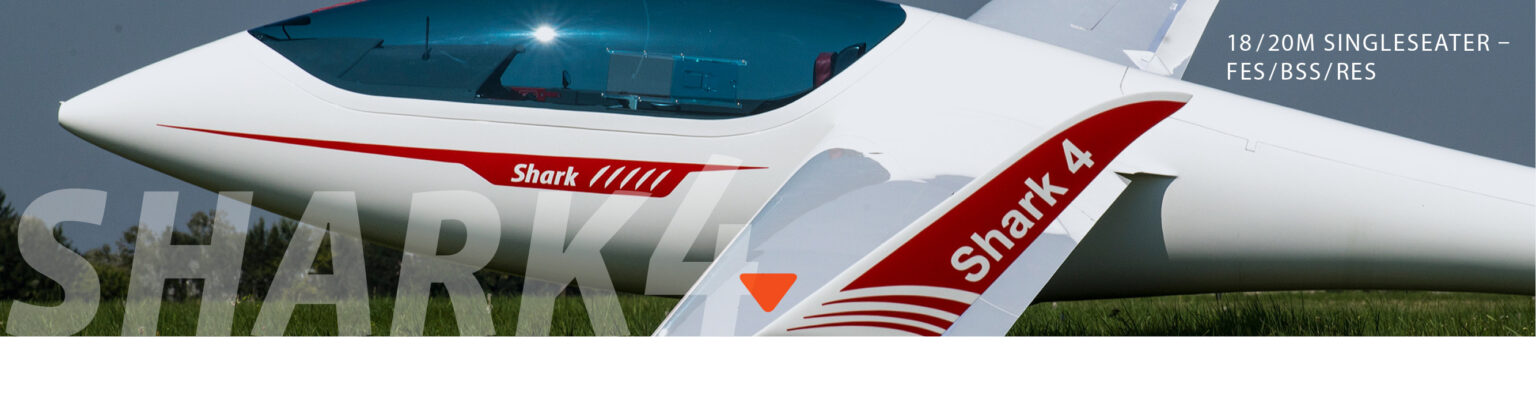
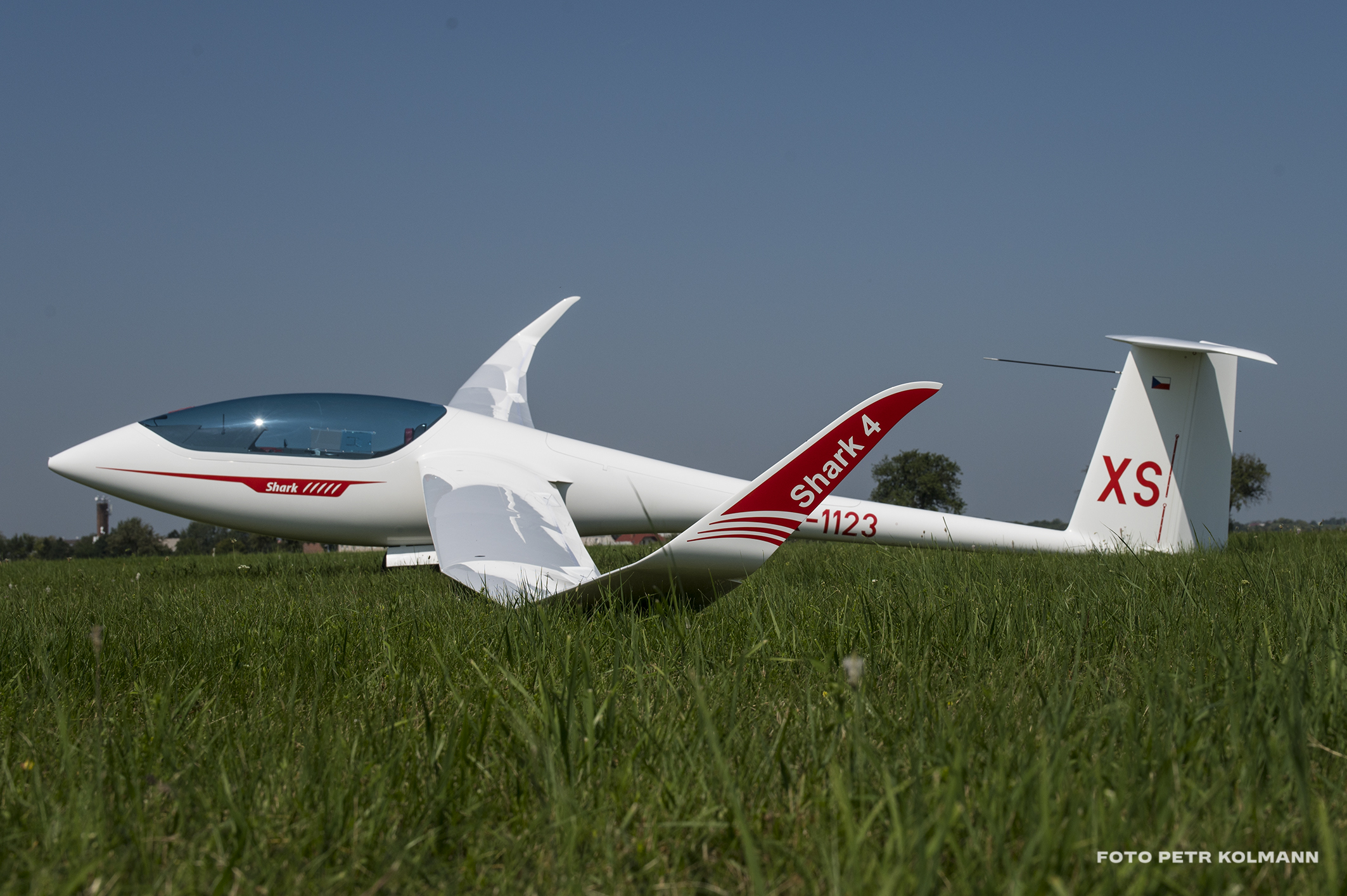
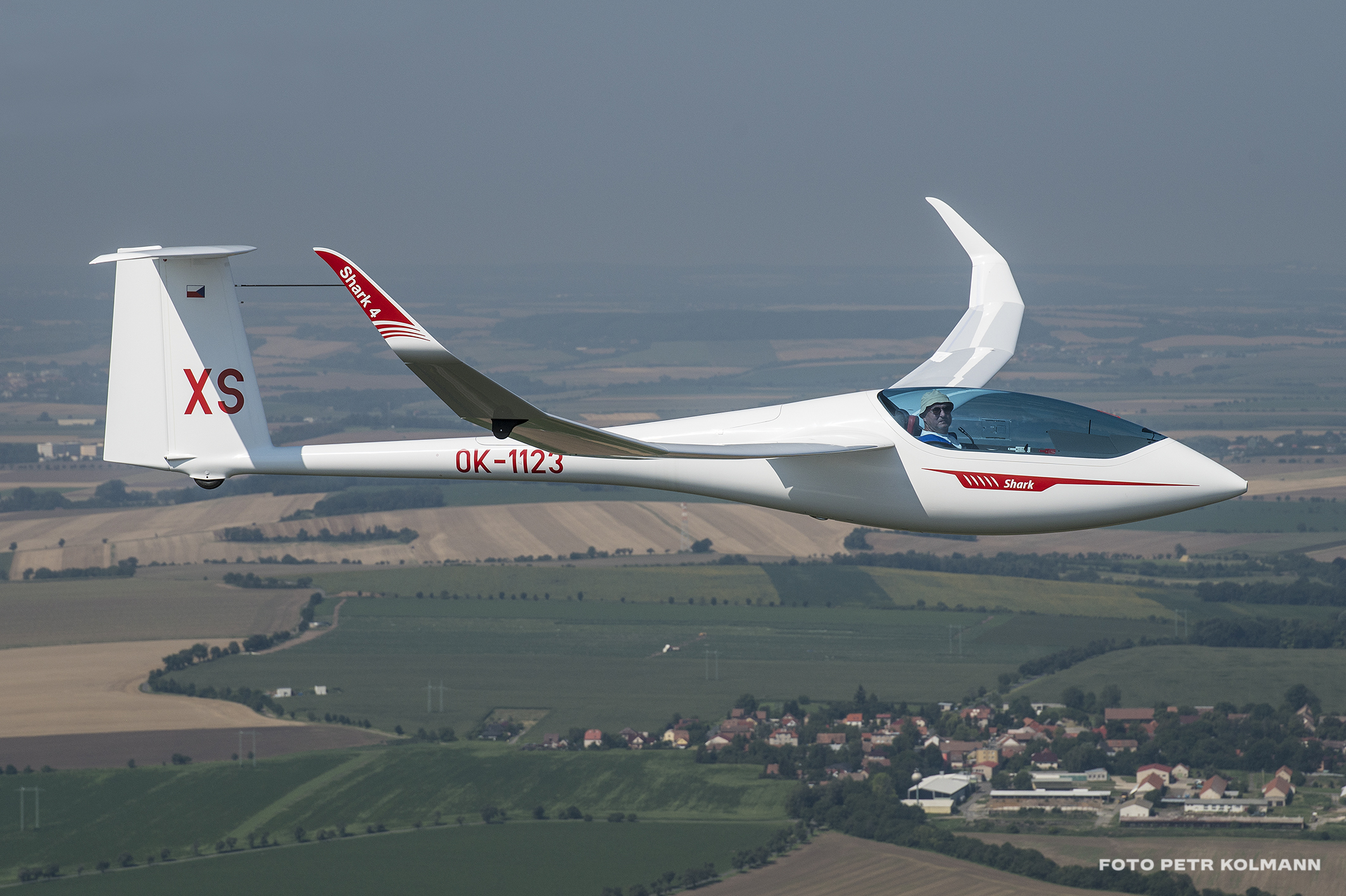
HPH SHARK 4U - The fourth generation of the Shark family

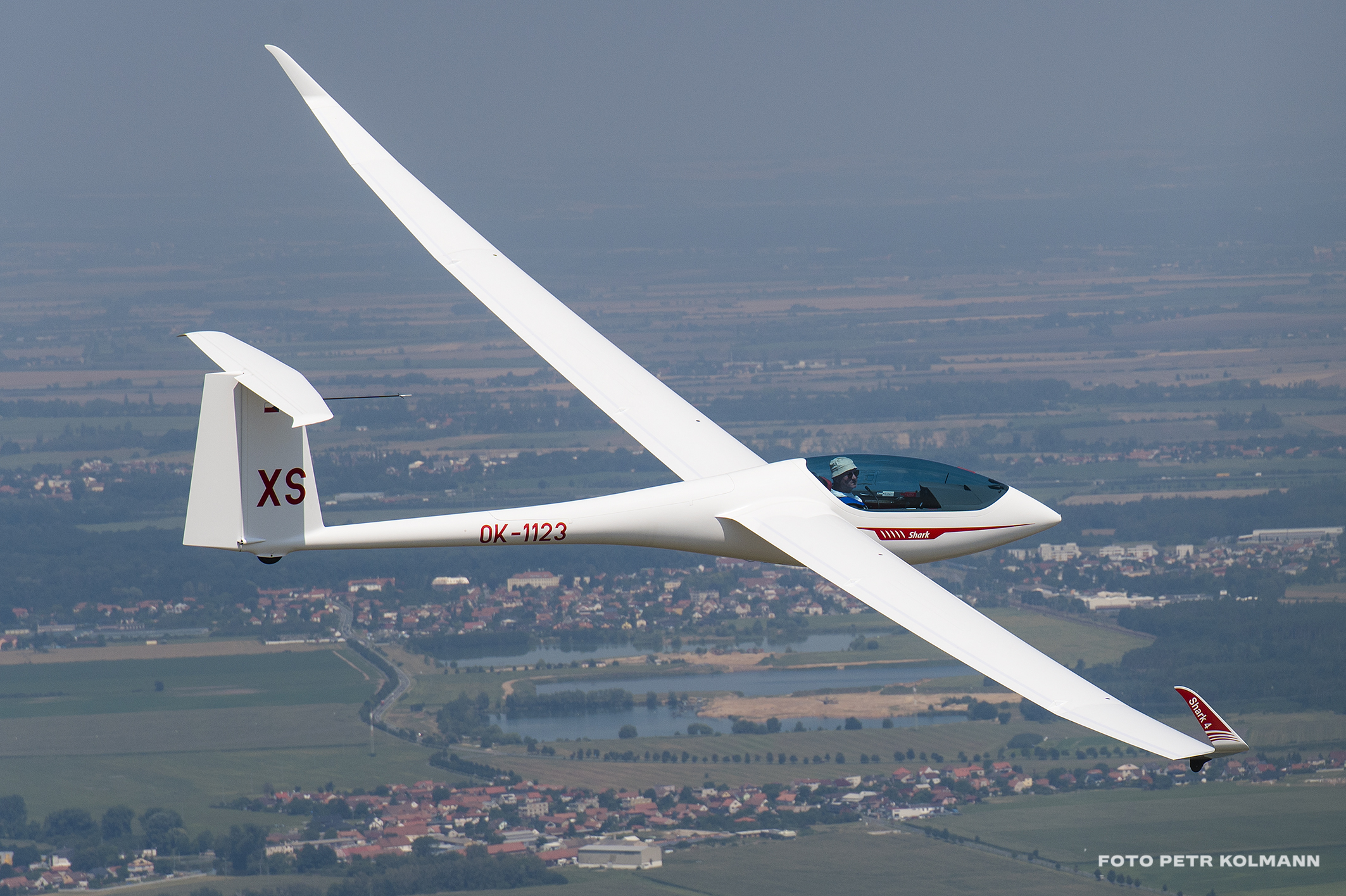
Shark 4U builds on HPH’s proven philosophy and takes it further with an entirely new wing, refined manufacturing details and a strong focus on safety and everyday usability.


ALL NEW WING


Aerodynamics optimised for low drag during
fast inter-thermal cruising and predictable
handling throughout the flight envelope.

18 OR 20 METERS

One platform, two wingspans. Interchangeable
wingtips allow the configuration to match the
mission and style of flying.

SAFETY – INTEGRAL

Numerous FEM calculations, break tests and crash simulations led to a new safety cockpit that can help to save life and to minimize damage. For example, the »Roger hook«, for safe emergency removal of the canopy, is an integrated standard in the solid frame.

CLEAN DESIGN

A smooth wing without turbulators, recessed
sealing tapes and rapid tool-free installation of
the wingtip extensions.

PILOT FIRST

Cockpit and structural improvements focus on
passive safety, ergonomics, comfort and
straightforward operation.

MTOW
0 kg
VNE
0 kts
Best L/D
0
Water ballast
0 kg

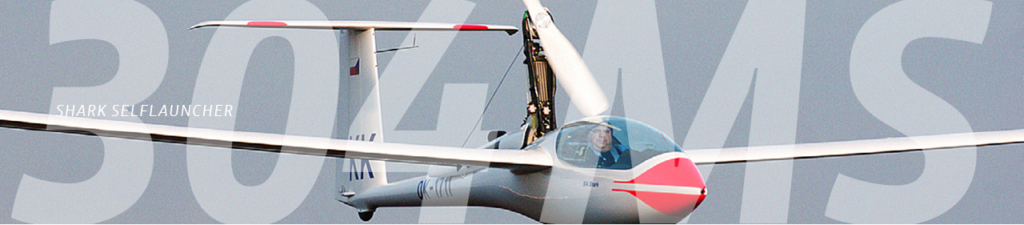
HPH 304 MS – THE POWERFUL SELFLAUNCHER

Die heute am Markt befindlichen Antriebskonzepte für eigenstartfähige Segelflugzeuge sind prinzipiell ähnlich. Ein Propellerturm wird ausgefahren und der Motor danach gestartet. Nach getaner Arbeit wird der Turm wieder eingeklappt.

Die Umsetzung, die Bedienkonzepte sowie die verwendeten Motoren sind aber doch recht unterschiedlich. Wir haben beim SHARK MS Eigenstarter unser Hauptziel, nämlich die maximale Zuverlässigkeit, konsequent verfolgt.

Ganz bewußt wird auf viel Automatismus verzichtet, denn jeder Sensor oder zusätzliche mechanische Teil kann versagen und dann ist der Pilot dem nicht funktionierenden System hilflos ausgeliefert.
HpH setzt auf ein System, das von BINDER Flugmotoren gebaut wird. Walter Binder hat ja bekanntlich dieses zuverlässige Antriebssystem für Segelflugzeuge – damals z.B. für die DG400 – erfunden und danach stets weiterentwickelt.Per Anfang 2016 ist bereits Werk-Nr. 537 (!) dieses Antriebskonzepts verbaut worden. Diese Kompetenz kommt jedem SHARK MS Piloten in Form von Zuverlässigkeit entgegen.
Der Kaltstart wird mit einer „Gummiball“ Einspritzpumpe vollzogen und der Propellerstopper wird rein mechanisch bedient. Dadurch wird der Wartungsaufwand verringert und die Störanfälligkeit massiv reduziert. Durch die von Beginn an geübten Bedienvorgänge ist es nahezu unmöglich, eine böse Überraschung zu erleben.

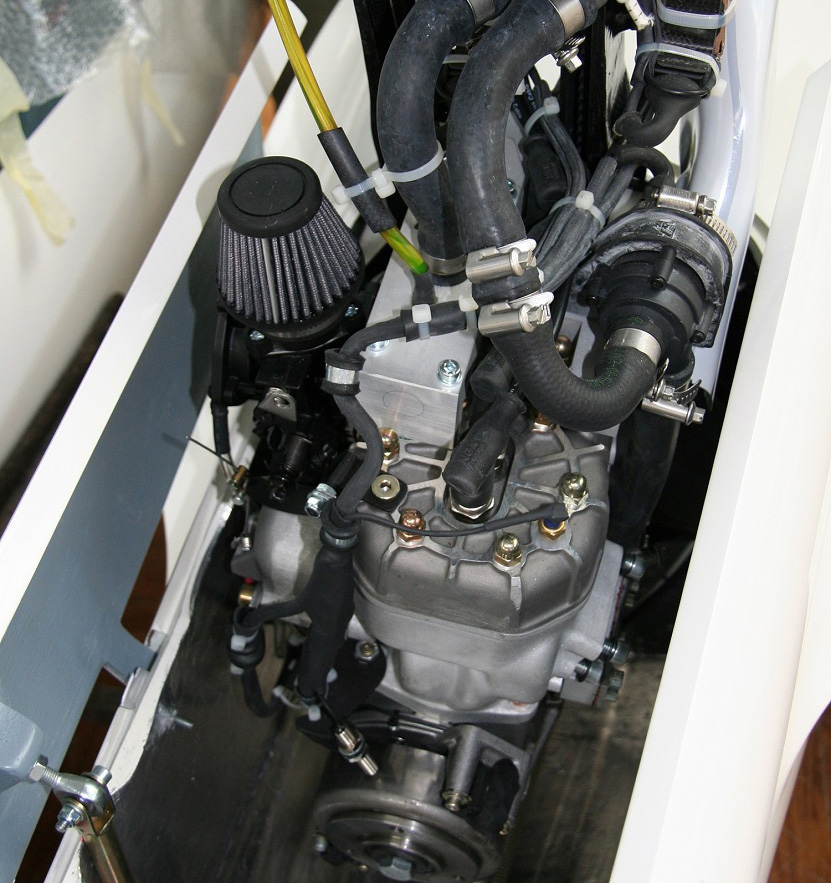
Als Triebwerk wird ein SOLO 2625-01 verwendet. Der Zweizylinder-Zweitaktmotor leistet 52 PS und ist thermisch hoch belastbar, da er komplett wassergekühlt ist. Der Kühler wird mit dem Propeller ausgeschwenkt und steht im direkten Luftstrom des Propellers.Der neue Propellerturm aus Kohlefaser spart Gewicht und ist äußerst stabil.

304MS ENGINE SYSTEM

MS (selflauncher)

Engine System

Type

Binder Solo 2625-01

Weight

23 kg / xx lbs

Alternator

12 V / 150 W

Maximum Power

38 kW / 52 hp

Max. cont. RPM

6250 l/min

Compression

9.5:1

Fuel consumption

21,5 l/h

Lubricant

1:50 Autosuper-2-stroke eng. oil

Propeller pillar

Carbon fibre

Engine Performance

Climb rate

Range

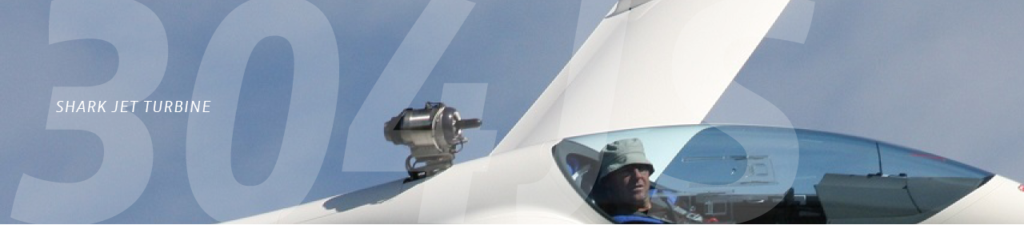
HPH 304 JS – THE EFFICIENT JET SUSTAINER

Flying like James Bond 🙂

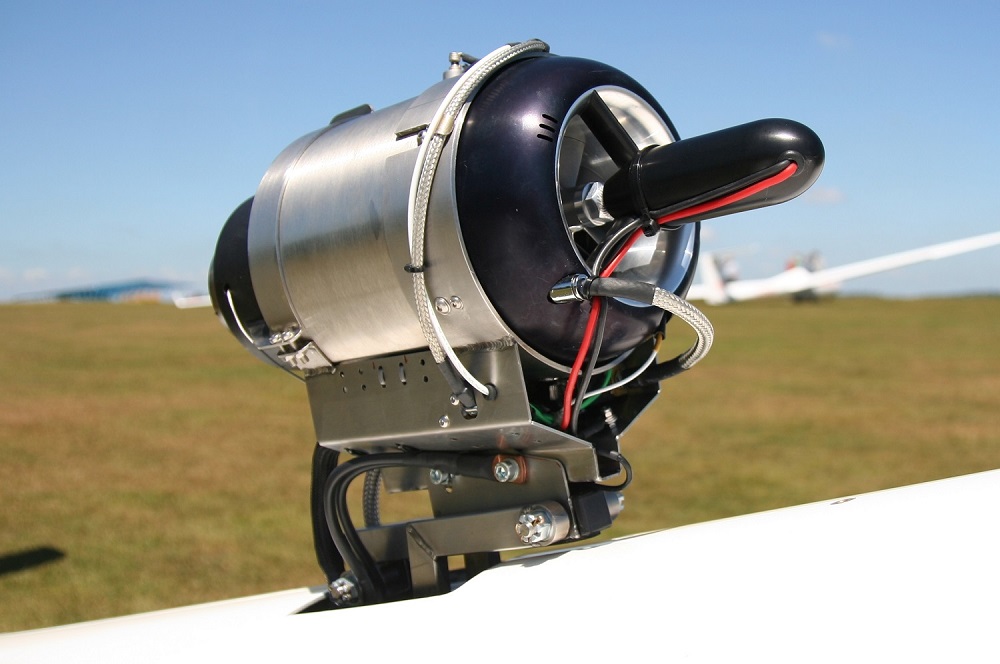
The jet engine was developed for HpH by former MTU engineers. It’s size, weight, thrust and fuel consumption have been tailored especially for the use in a glider. So why should you choose our JET propulsion unit?

1. Low weight: System weight of less than 10kg (22 lbs)

2. Wide speed range: It allows speeds ranging from slow climbing to glider VNE while keeping constant thrust throughout the velocities.

3. User friendly operation: Advanced electronics automatically control the start-up/shut-down?sequence, thrust regulation as well as the retraction of the whole unit. There’s no need for choke, propeller brake, decompression levers and other controls. Operate with a single switch, power-up with a single knob!

4. No vibrations: Cruising with a jet (engine) is pleasant, silent and you don’t feel any vibrations in the cockpit. Not even the best propeller systems can compete!

5. Maintenance-free & easy to install: Disassemble in 5 minutes using standard tools, pack in a small and light package, send to us for inspection and keep on gliding in the meantime.

6. Special software for your local conditions: Gliding in Sweden or in Australia? Get your customized software settings!

7. Optimal fuel consumption of 17l/100km (6gal/100nm) – A virtually maintenance-free engine with reasonable operating costs.

HPH 304 ES – THE SMOOTH ELECTRIC SOLUTION

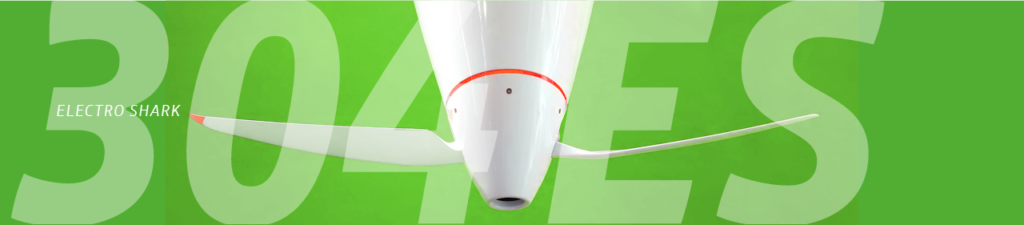
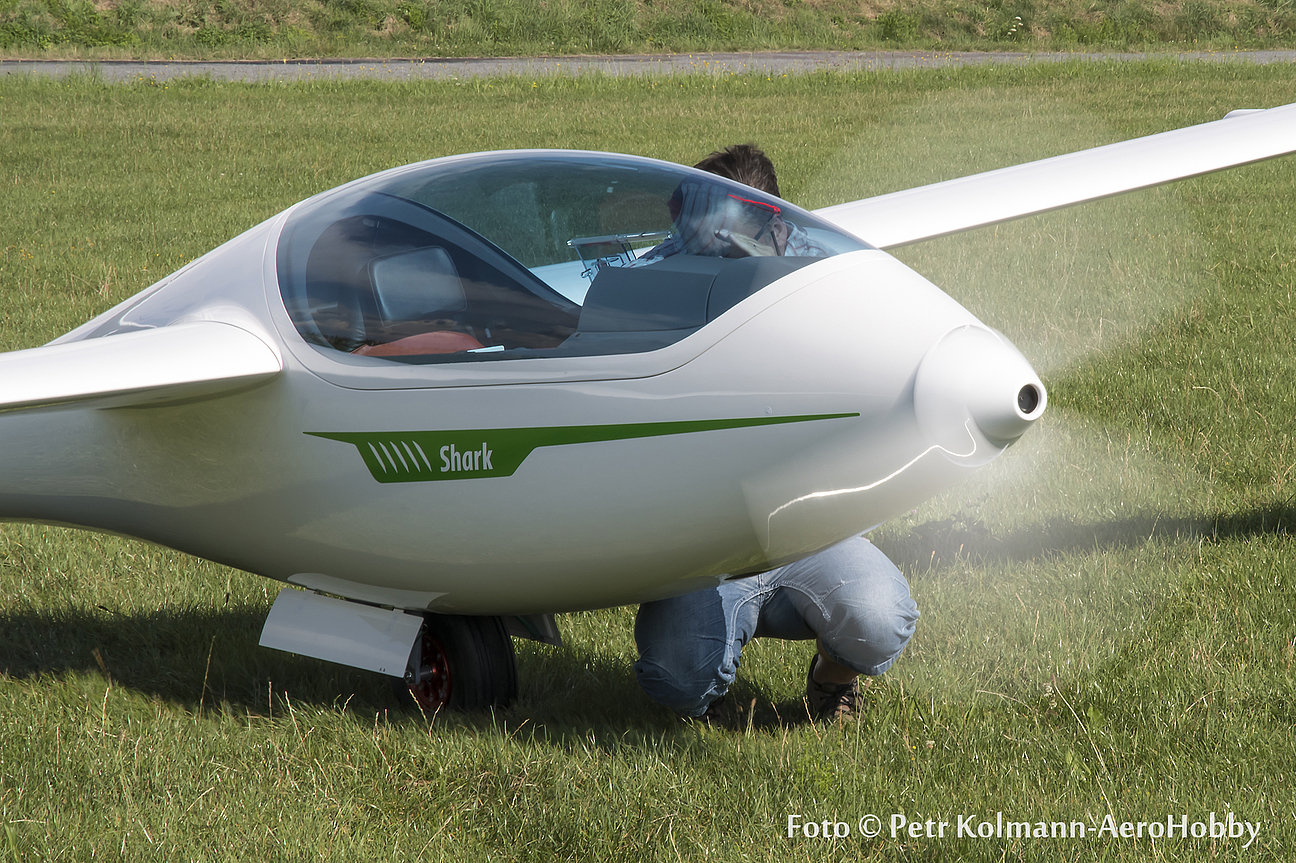
With the introduction of the Shark 304ES, HPH move into the electric sailplane arena. Its experience with powered sailplanes and partnership with LZ Design continue the approach of working with the best companies to bring the Shark 304ES to market quickly and with a very high “out-of-the-box” product maturity.

The Shark 304ES delivers a significant battery-powered self-retrieve capability of approximately 80 km’s which is more than enough to get you to an airfield or in many cases back to soaring conditions or to your home base.

FES SYSTEM COMPONENTS

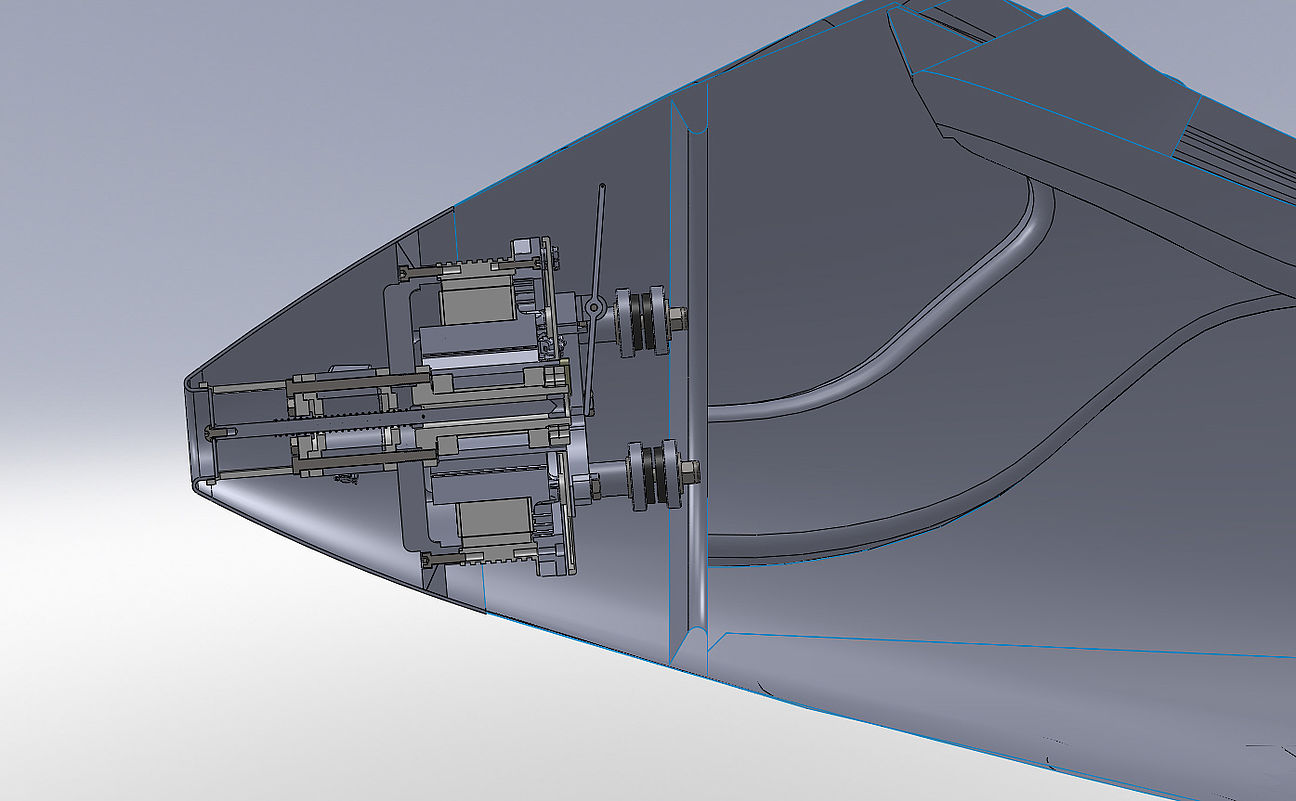
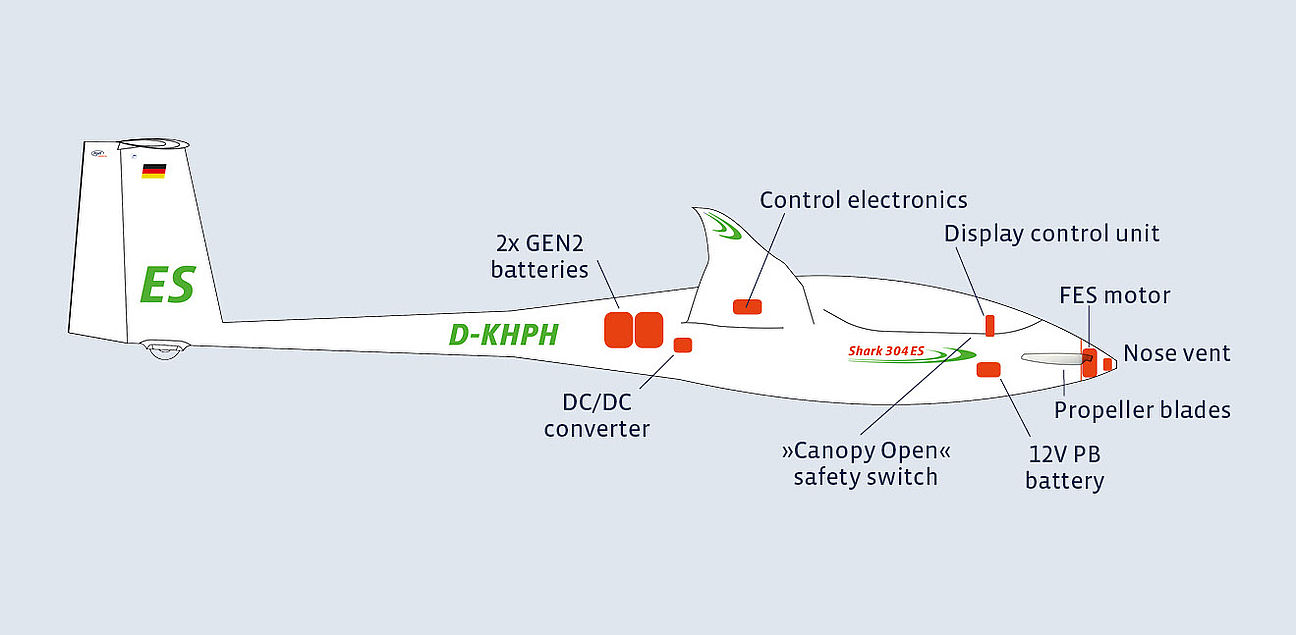
Using experience gained during development on the Certified Front electric sustainer (FES) System, LZ Design were able to work with HPH to determine the best way of adapting the Shark sailplane to offer the electric “Self-Retrieve” capability.

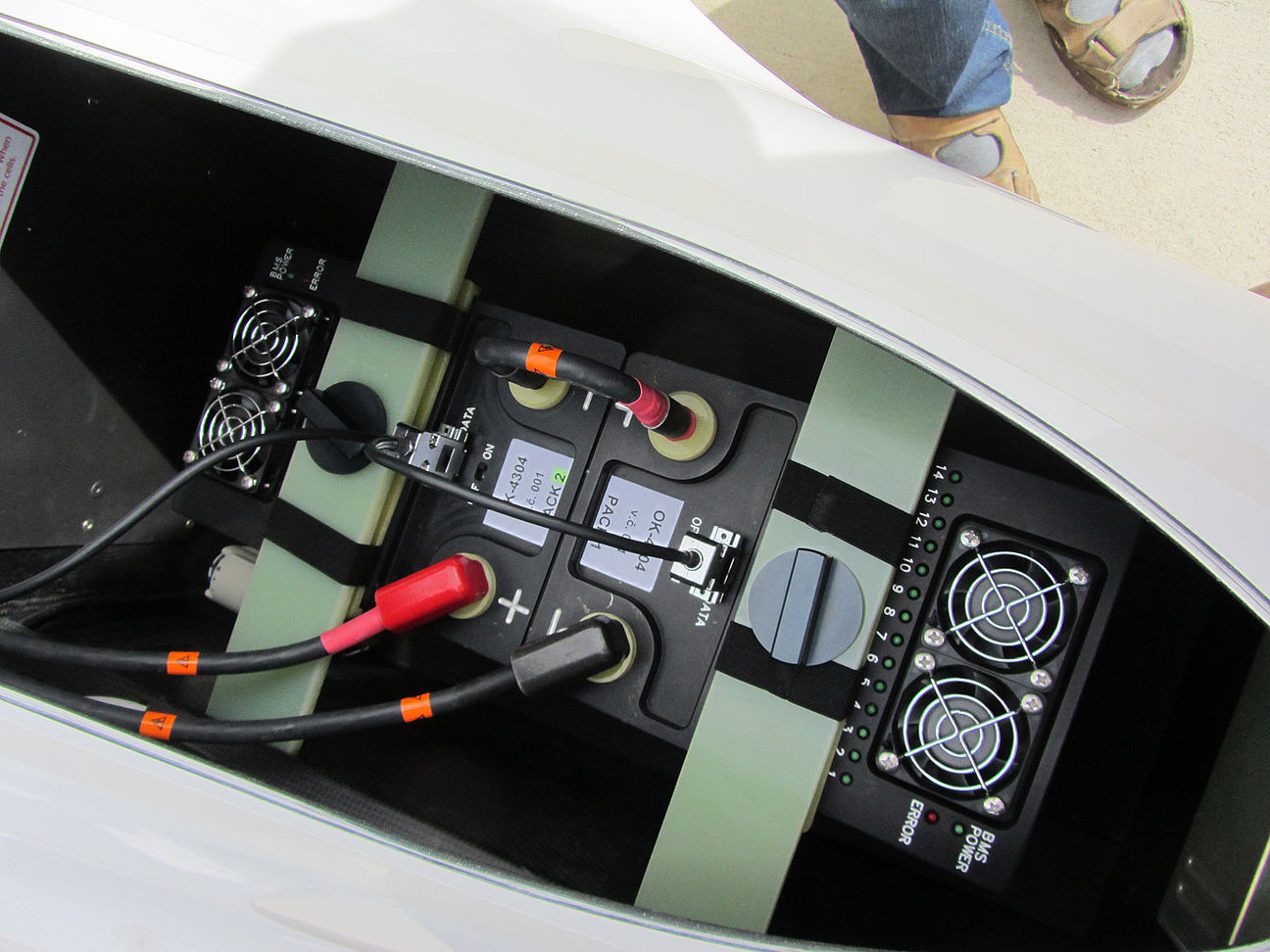
The system uses 2 GEN2 LiPo batteries which each come with a dedicated balancing charger. One battery weighs ~15kg and only looses about 1% of its charge in a month. They still retain 70–80% of their charge after 1000 complete recharge cycles. Full charging takes about 6–8 hours. Typically charging time wpuld be 2-3 hours after flight. Installing the batteries takes about 5 minutes.

CONTROLLER UNIT

The LXNAV FES controller is left powered for the duration of the flight. After take-off, the FES power is enabled via a toggle switch, whereupon the FES system is ready to offer immediate thrust by rotating the knob clockwise. This knob controls the power level. Rotating anti-clockwise stops the motor. The blades are then parked automatically.

PROPELLER UNIT

The FES propeller is interlocked to prevent inadvertent operation on the ground. The FES system automatically parks the blades and nose to ensure optimal aerodynamic performance.

The FES propeller blades are protected during transport or when on the airfield with a removable cover. The Cobra trailer nose cone incorporates cut-outs for the propeller during transit.

304ES ENGINE SYSTEM

ES (ELECTRIC SUSTAINER)

Engine System

Battery technology

LiPo GEN2 system

Battery weight

2 x 14 kg /2 x 31 lbs

Maximum Power

23 kW

Maximum RPM

4.500

Engine Performance

Climb rate

1.5–2 m/sec

Range

80 km

SHARK 4U - TECHNICAL DATA

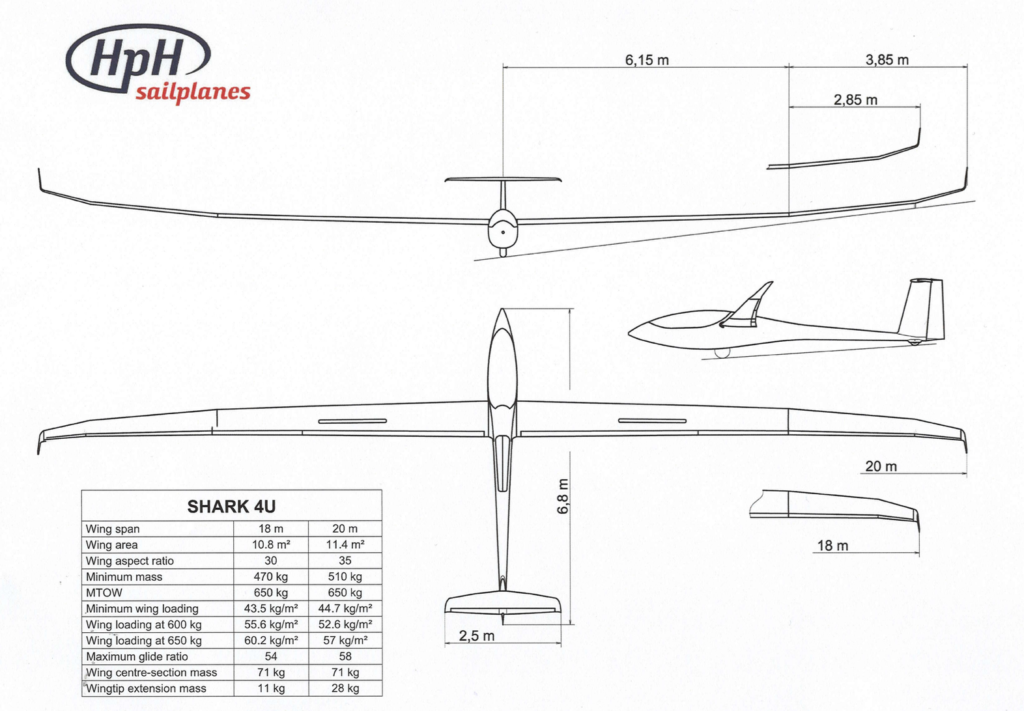
18 m

20 m

Geometry

Wing span

18 m (59 ft)

20 m (65,6 ft)

Wing area

10,8 m2

11,4 m2

Aspect ratio

30

35

Fuselage length

6.8 m / 22.28 ft

6.8 m / 22.28 ft

Weights

Empty weight


MTOW

650 kg /1433 lb

650 kg / 1433 lb

Water ballast

200 l / 53 US gal

200 l / 53 US gal

Min. wing loading

43,5 kg/m2

44,7 kg/m2

Max. wing loading

60,2 kg/m2

57 kg/m2

Glide Performance

Best glide ratio

> 54

> 58

at speed


min. sink rate (at min. weight)


at speed


Limitations

Stall speed (at max. weight)


VNE

280 km/h /150 kt

280 km/h /150 kt

CONFIGURATION

STANDARD CONFIGURATION AND OPTIONS

Our basic system package includes:

  •